
In partnership with
Good morning, AI Movers! Anthropic’s Claude just unlocked a game-changing ability: it can now build, host, and share interactive AI apps, prototypes, and tools – no coding required. This new feature, called Claude Artifacts, transforms Claude from a mere chatbot into a no-code app builder, letting anyone turn a simple prompt into a functional, shareable mini-application. (Yes, you read that right – everyone is now an app creator.) We’ve seen Claude steadily gain powers – from connecting to the web in real-time to handling massive context windows – and this latest update might be its most empowering yet. Let’s get into how it works, what you can create, and why it matters.
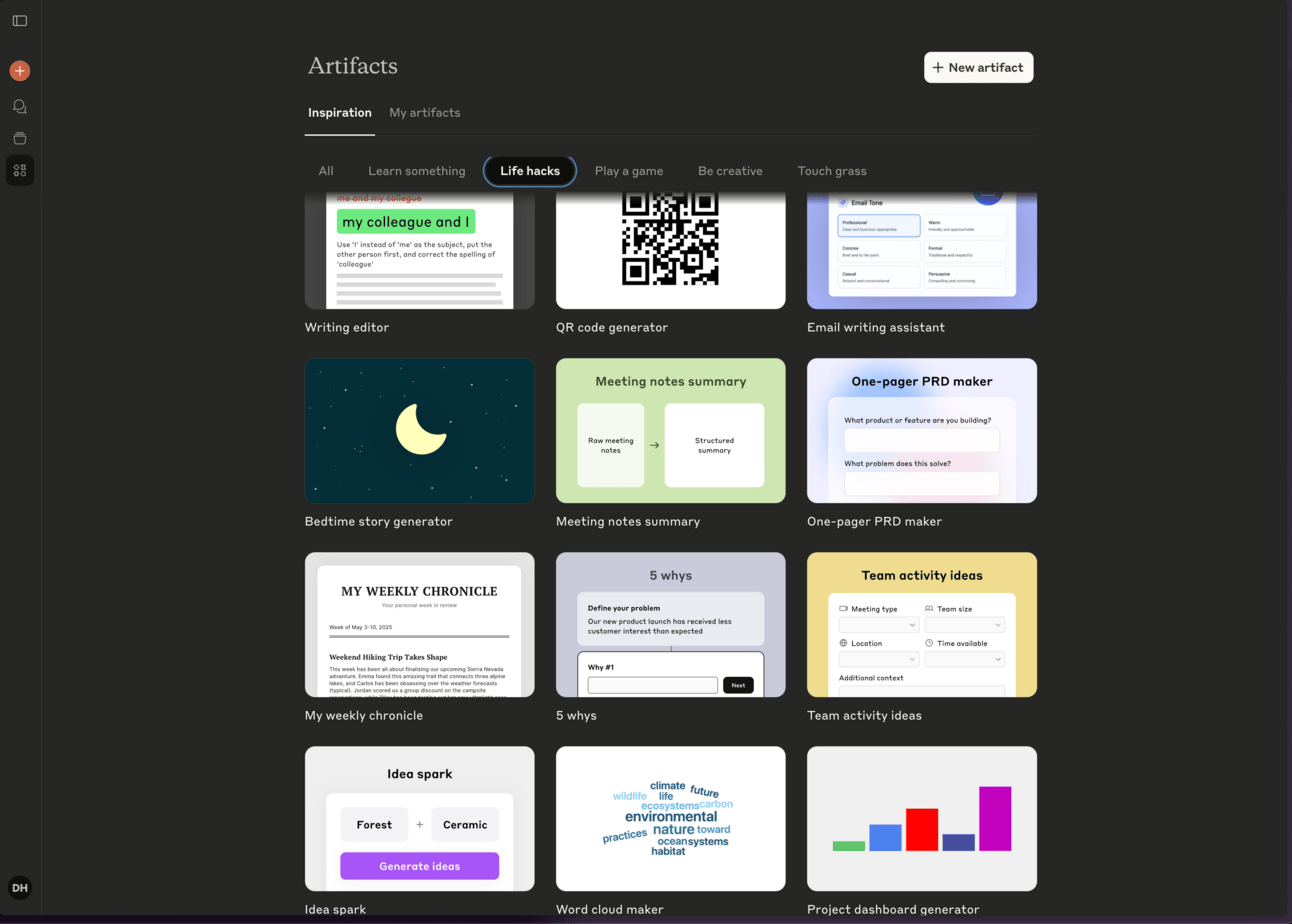
Claude’s Artifacts transforms conversations into functional apps, democratizing development for millions of non-coders worldwide by First AI Movers.
Claude’s No-Code App Revolution
Claude Artifacts eliminate the copy-paste routine of AI workflows. Instead of just answering questions, Claude can now produce interactive artifacts (mini-apps) right inside its chat interface. What are Artifacts? Think of them as AI-augmented web apps you build through conversation. Since their initial launch, users have created over 500 million artifacts – everything from productivity tools to educational games. Now, with Claude’s intelligence embedded, these creations can process user inputs and update in real time, acting like dynamic software rather than static chat outputs.
Getting started is straightforward. First, enable the “Create AI-powered Artifacts” beta in your Claude app settings. Once toggled on, you simply tell Claude your idea and ask it to “use Claude” in the artifact – essentially instructing Claude to call itself via an internal API. For example, you might prompt: “Create a simple chatbot that uses Claude; it should respond with a compliment to any user input.” Claude will then generate a working “compliment bot” app where you can type input and get a cheerful response. No API keys, no servers – it uses your existing Claude session and usage limits. This means no extra costs or setup hassles: you can focus on the fun part of ideation and let Claude handle the backend.
Exploring and customizing artifacts: Anthropic has added a new Artifacts sidebar in the Claude app. Here, you can browse curated artifacts for inspiration, fork and customize existing ones in minutes, or build from scratch through simple conversation prompts. For instance, I found a one-page PRD (Product Requirements Doc) generator artifact and clicked “Customize” – within minutes, Claude repurposed it into an AI copywriting coach that critiques and improves marketing copy. I even tuned it to mimic Alex Hormozi-style copy reviews (think punchy, value-driven feedback). After some back-and-forth with Claude (“make the tone more bold,” “limit suggestions to 3 bullet points,” etc.), I had a personalized copywriting expert app ready to go.
Sharing your creations is just as easy. Claude lets you publish an artifact with one click, generating a shareable link. I published my copywriting coach and sent the link to a friend. Anyone with the link can interact with your artifact in their browser, even if they aren’t technical, until you decide to unpublish it. My friend tested the “Alex Hormozi Copy Doctor” by pasting in a draft sales blurb. The artifact’s response: a revamped version with a sharper hook and more straightforward value proposition, complete with a few Hormozi-esque power words. (We both had a good laugh and a better piece of copy at the end!)
Curious how well these AI-generated apps perform? You can actually analyze and iterate on them in real time. Claude retains context about what you’ve built, so you can ask it things like, “How can we improve the output’s tone?” or “Add an example section to the app.” Under the hood, Claude is essentially calling its own API to generate responses inside the artifact, which means you can leverage Claude’s full 100k-token memory and skills within your app. I even used Claude’s API in a separate session to measure before-and-after sentiment scores on our copy – the revised version was 40% more positive and engaging (a nice quantitative confirmation).
What kinds of apps can you build? According to Anthropic, “the possibilities are as endless as your imagination.” Early users have built everything from games with adaptive storylines to smart tutors that tailor explanations and data analyzers that do plain-English Q&A on your spreadsheets. In my own tinkering, I found Claude is equally comfortable whipping up business tools as it is creating just-for-fun apps. Here are a few standout use cases:
-
Polished Email Assistant: Imagine an artifact that proofreads and refines your emails before you hit send. You draft a note in one panel, and the AI suggests clearer wording, professional tone adjustments, and even markdown formatting. One prompt to Claude (“Build an email writing assistant that connects to my Gmail drafts”) could generate a tool to ensure your communication is polished and on point. In fact, Claude can integrate with your Google Workspace (Gmail, Drive, etc.) to pull context from your actual emails or docs, meaning the assistant can learn your style or reference past threads for context.
-
Quiz Generator for Lead Magnets: Interactive quizzes are a proven way to engage an audience and gather leads. With Claude, you can create a quiz app tailored to your business in minutes. For example, a fitness coach could ask Claude to “build a 5-question Fitness Goal Quiz that offers a personalized workout tip at the end.” The result is a shareable quiz funnel – no coding or hiring a developer needed. I even had Claude brainstorm 10 quiz topic ideas for different professions (content creation, marketing agency, SaaS startup, etc.), and it churned out creative lead-magnet concepts on the fly. This can be a game-changer for entrepreneurs seeking to expand their email lists with AI-generated content.
-
Custom Dashboards & Data Visualizations: Have data, will visualize! Claude artifacts support HTML/JS, which means they can generate charts and dashboards. For instance, I asked Claude to create a “sales dashboard app with an interactive bar chart of monthly revenue.” It produced a mini dashboard with sliders to adjust the time range and a dynamic chart that updated accordingly. In the community showcase, there’s even a Sales Performance Dashboard artifact featuring interactive visualizations. Business analysts or managers without coding skills can now conjure up live dashboards by simply describing what they need. (Under the hood, Claude might use libraries like D3 or Chart.js, but you, as the user, only see the end result – pretty neat!)
-
Language Tutor & Flashcard Maker: Language learning gets a boost when AI can adapt to you. Claude can build a personalized language tutor that engages in conversation, teaches new words, and generates practice flashcards on any topic. In fact, one of Anthropic’s sample artifacts is a Language Tutor that lets you chat in the language of your choice, tracks your progress, and quizzes you with flashcards. This is like having a private tutor who’s available 24/7. Similarly, educators are creating study aids – e.g. a flashcard generator where students pick the topic and the AI creates custom flashcards, all inside a shareable interface.
-
Creative Tools (Beyond Text): Artifacts aren’t limited to text output. They can produce images or other media via code. A fun example: someone built a QR Code Generator artifact – provide a URL, and it instantly displays a scannable QR code. Others have experimented with AI-powered drawing tools, using Claude to generate SVG graphics and simple illustrations with code. While Claude’s not about to replace Photoshop, it can handle basic visuals (charts, diagrams, word clouds) with precision. It’s a glimpse of how AI might blur the line between a “chatbot” and a creative suite.
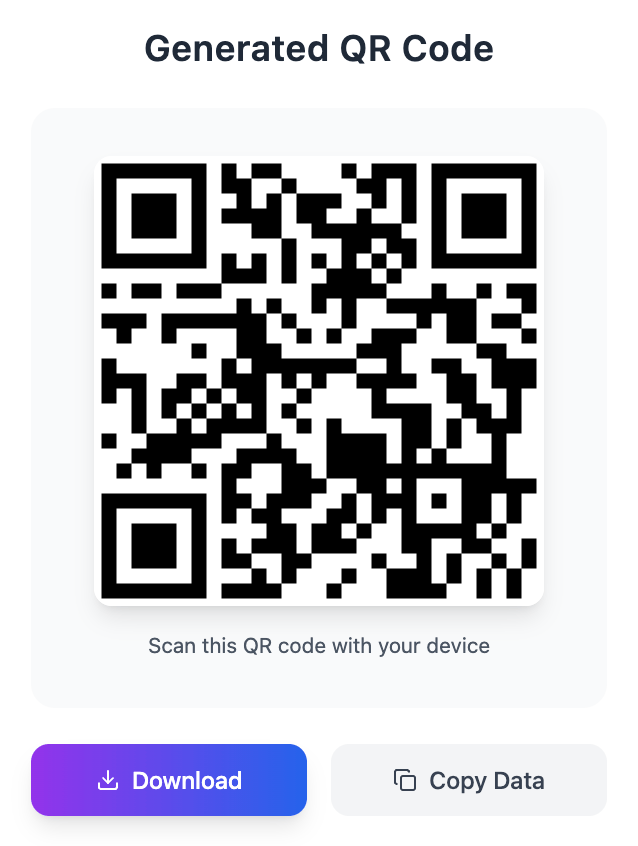
Starting prompt: Create a react app artifact for a QR Code Generator that creates QR codes for URLs, text, and contact info. If users create a QR code for a URL, make sure that aiming the camera at the QR code actually triggers the URL itself, rather than a Google search for the URL. By First AI Movers.
The content below is exclusive to premium members. Want AI insights that give you a first-mover advantage? Become a Premium First AI Movers subscriber to unlock exclusive content and get a free 15-minute strategy session with me, Dr. Hernani Costa, AI CxO Consultant, to talk AI, tech, business, and even healthspan optimization through science-backed micro-habits. Don’t miss out on this limited opportunity to stay ahead. Join now: https://www.firstaimovers.com/upgrade
All these examples drive home a bigger point: AI is moving from conversation to creation. Instead of just chatting with us, Claude can now build things for us in real time. It’s democratizing software development, allowing non-coders to solve their own problems with custom apps. Of course, this raises the question – what does this mean for jobs and skills?
The impact on jobs & embracing automation: This no-code AI trend is a double-edged sword. On one hand, tools like Claude Artifacts will automate away many routine tasks – you might not need a junior developer to prototype that internal tool or a content assistant to draft that report. But rather than spell doom, history suggests it will elevate our roles. By offloading grunt work to AI, humans can focus on higher-level creative and strategic tasks. In fact, the rise of these AI “app generators” is creating a new breed of “citizen developers” – professionals in any field who build solutions without traditional coding. The most successful people will be those who embrace these AI helpers and learn to direct them effectively rather than fear them. As Anthropic themselves put it, the future might belong not just to those who code, but to those who can “prompt AI most effectively”.
To help individuals and teams stay ahead of this curve, I’m excited to announce the upcoming First AI Movers SWAT Academy. This initiative (launching soon) is designed to future-proof your skills by teaching you how to harness AI tools like Claude in your workflows. Whether it’s automating business processes, building custom AI apps, or integrating AI into everyday tasks, the goal is to turn automation into an opportunity rather than a threat. As AI continues to evolve, learning to work alongside it will be the key to thriving in the new economy. Stay tuned for more details on the First AI Movers SWAT Academy in the coming weeks – I can’t wait to share what I’ve been building to help you become an “AI-first” mover! Join the waiting list for updates here (password: firstaimover).
Fun Fact
Did you know Anthropic’s AI assistant “Claude” is named in homage to Claude Shannon – the famed mathematician and father of information theory? The team chose the name partly to honor Shannon’s legacy in computing and also to buck the trend of female AI assistant names (think Siri, Alexa). So next time you chat with Claude, remember it carries the namesake of a genius who laid the groundwork for the digital age.
Let’s Wrap Up.
Claude’s evolution from chat to app-builder shows how fast our AI tools are leveling up. The big takeaway: don’t just use AI, build with it. A year ago, “build me a flashcard app” would’ve sounded like a developer’s job; today, it’s a single sentence to Claude. The playing field is being leveled in real time. Question for you: What’s the first AI-powered app you want to create with Claude (or maybe you’ve already built one)? Hit reply and let me know – I’d love to hear your ideas and experiences!
Now, a word from our partner:
The best HR advice comes from people who’ve been in the trenches.
That’s what this newsletter delivers.
is your insider’s guide to surviving and thriving in HR, from someone who’s been there. It’s not about theory or buzzwords — it’s about practical, real-world advice for navigating everything from tricky managers to messy policies.
Every newsletter is written by — a Chief People Officer who’s seen it all and is here to share what actually works (and what doesn’t). We’re talking real talk, real strategies, and real support — all with a side of humor to keep you sane.
Because HR shouldn’t feel like a thankless job. And you shouldn’t feel alone in it.