

The AI education gap is real. While companies scramble to implement AI strategies, most professionals struggle to keep pace with developments that reshape industries weekly. You don’t need a $10,000 bootcamp or an MIT degree to master AI — you need the right YouTube channels and a deliberate learning strategy.
I’m Dr. Hernani Costa, founder of First AI Movers. With 25+ years in technology, I’ve seen firsthand how the right educational resources separate those who thrive in education, life, and business from those who struggle. After analyzing dozens of AI learning channels and tracking which resources actually produce results, I’ve distilled the ten YouTube channels that will give you a Master’s-level AI education — completely free.
Ready for AI traction, not hype? Workshops, audits, automations & agents—tailored to your team.
👉 Book here
YouTube has become the world’s largest free AI university, with creators delivering MIT-quality education to millions. The ten channels covered here span practical AI tools (Matt Wolfe), automation workflows (Nate Herk), foundational machine learning (DeepLearning.AI by Andrew Ng), cutting-edge research (Two Minute Papers), and productivity hacks (Jeff Su). Each channel addresses specific learning needs: beginners should start with DeepLearning.AI and The AI Advantage; practitioners need Matt Wolfe and Nate Herk for tools and automation; researchers benefit from Two Minute Papers. Combined with deliberate practice, these channels provide education that surpasses most paid courses — if you approach learning systematically rather than randomly consuming content.
Why YouTube Beats Traditional AI Education in 2025 and 2026
The traditional education model can’t keep pace with AI’s evolution. By the time a university updates its curriculum or a bootcamp refreshes its materials, the tools and techniques have already shifted. YouTube creators publish within days of major AI announcements, offer real-world implementations rather than theoretical concepts, and test tools on real business problems.
But here’s what most people miss: YouTube isn’t just free content — it’s a personalized learning laboratory. You can pause to experiment with code, rewind complex explanations, and choose instructors whose teaching styles match your learning preferences. The comment sections become collaborative learning spaces where thousands of practitioners share insights, troubleshoot problems, and extend the lesson beyond the video.
The platforms also give you something traditional education rarely provides: direct access to practitioners building production AI systems today. These aren’t academics theorizing about AI’s future — they’re consultants, founders, and developers implementing solutions for Fortune 500 companies and scrappy startups alike. Their battle scars become your shortcuts.
I’ve watched everyone from students to senior executives level up their AI capabilities using a YouTube-first strategy, and the pattern is consistent: those who combine structured channel selection with deliberate practice outperform those who spend tens of thousands on formal programs. The difference isn’t the information — it’s the application methodology.
The 10 Essential AI Learning Channels You Need to Follow
1. Matt Wolfe — Your AI Tools Intelligence System
Matt Wolfe runs the ultimate laboratory for AI tools and practical applications. With over 850,000 subscribers, his channel covers everything from ChatGPT advanced techniques to Midjourney workflows and automation use cases that actually save time.
What sets Matt apart is his systematic testing approach. He doesn’t just showcase tools — he stress-tests them with real projects, documents failures alongside successes, and updates his assessments as tools evolve. His Future Tools website catalogs thousands of AI applications with community-driven ratings, giving you a constantly updated resource for discovering solutions to specific problems.
For business professionals, Matt’s content delivers immediate ROI. His tutorials on automation workflows, AI-powered content creation, and productivity hacks translate directly into hours saved and capabilities gained. I regularly reference his tool reviews when advising clients on their AI stack decisions because his assessments balance enthusiasm with pragmatism.
How To Be An Expert In Anything
Watch: https://www.youtube.com/@mreflow
2. Nate Herk — Master AI Automation Without Code
Nate Herk‘s channel specializes in n8n automation and practical AI workflows that don’t require computer science degrees. His 426,000+ subscribers learn to build sophisticated AI systems using visual programming interfaces, making advanced automation accessible to non-technical professionals.
What makes Nate’s content invaluable is the complete workflow approach. He doesn’t just show you how to connect APIs — he walks through business logic, error handling, and production-ready patterns. His YouTube strategist agent tutorial demonstrates how he uses AI to consistently generate $6,000+ monthly revenue, with every step documented for replication.
From my experience implementing automation systems, Nate’s tutorials shortcut months of trial and error. His n8n workflows for data processing, content generation, and business automation provide templates you can adapt immediately. The Skool community he’s built offers additional support for troubleshooting and extending the concepts.

I Tested OpenAI’s AgentKit Against n8n: What You Need to Know
Watch: https://www.youtube.com/@nateherk
3. DeepLearning.AI — Andrew Ng‘s Machine Learning Foundation
Andrew Ng needs no introduction in the AI world. The co-founder of Coursera, former head of Google Brain, and Stanford professor has educated millions through DeepLearning.AI. His YouTube channel offers structured courses on supervised and unsupervised learning, neural networks, and practical AI implementation.
What distinguishes Ng’s content is the perfect balance of theory and application. He explains the mathematical foundations without getting lost in academic abstraction, then immediately shows you how to implement concepts in production systems. His Machine Learning Specialization remains the gold standard for building a solid AI foundation.
For executives and technical leads, Ng’s content provides the conceptual framework necessary for strategic AI decisions. You’ll understand not just how to use AI tools, but why certain approaches work for specific problems — knowledge that prevents costly implementation mistakes.
Learn to build effective Agentic AI systems with Andrew Ng
Watch: https://www.youtube.com/@Deeplearningai
4. Two Minute Papers — Cutting-Edge AI Research Made Accessible
Károly Zsolnai-Fehér‘s Two Minute Papers distills complex AI research into compelling, digestible videos that reveal what’s possible with current technology. With 1.72+ million subscribers, the channel tracks breakthroughs in machine learning, computer graphics, and AI applications with infectious enthusiasm.
What makes this channel essential is the forward-looking perspective. While most channels focus on tools available today, Two Minute Papers shows you what’s coming in 6-12 months. This advanced visibility allows you to anticipate capability shifts and prepare your strategy accordingly.
I use Two Minute Papers to stay ahead of AI developments that will impact my clients. When Károly covers a breakthrough in text-to-video generation or reinforcement learning, I know it’s time to start planning how those capabilities will disrupt specific industries. His “First Law of Papers” — don’t look at where we are, look at where we’ll be two more papers down the line — perfectly captures AI’s exponential progress.

DeepMind’s AI Just Solved Video Generation In A Way Nobody Expected
Watch: https://www.youtube.com/@TwoMinutePapers
5. The Next Wave — Business Strategy Meets AI Implementation
Matt Wolfe and Nathan Lands co-host The Next Wave, focusing on AI’s business implications and strategic implementation. The podcast format allows for a deeper exploration of how companies actually deploy AI, with case studies from successful implementations and honest discussions of failures.
This channel bridges the gap between technical capability and business value. While other channels show you how to use ChatGPT, The Next Wave discusses when AI makes financial sense, how to calculate ROI on AI investments, and which organizational structures support successful AI adoption.
For decision-makers, this context is crucial. The technical implementation is the easy part — the hard part is knowing which problems AI should solve, how to structure teams around AI capabilities, and when to build versus buy. The Next Wave provides this strategic framework.

AI NEWS: 5 New Tools, Elon Musk’s Matrix & GPT Erotica Explained
Watch: https://www.youtube.com/@TheNextWavePod
6. Kevin Stratvert — Practical AI for Microsoft Ecosystem Users
Kevin Stratvert, a former Microsoft PM, teaches technology and AI tools with a focus on productivity and real-world applications. His ap. 4 million subscribers benefit from insider knowledge of Microsoft’s AI features and clear tutorials that work for beginners and advanced users alike.
What makes Kevin’s content particularly valuable is its integration with the Microsoft ecosystem. As companies increasingly adopt Microsoft’s AI capabilities through Copilot and Azure, understanding how these tools work together becomes essential. Kevin’s tutorials show you how to maximize these investments.
His recent coverage of AI features in Edge, OneDrive, and Office applications demonstrates practical ways to integrate AI into daily workflows without changing your entire tech stack. For organizations already committed to Microsoft, Kevin’s channel is the fastest path to AI productivity gains.
5 Things You Didn’t Know Your PC Could Do (Copilot Voice & Vision)
Watch: https://www.youtube.com/@KevinStratvert
7. The AI Advantage — Accessible AI Tutorials for Everyone
The AI Advantage specializes in making AI accessible through practical tutorials on ChatGPT, prompt engineering, and workflow optimization. The channel’s strength lies in breaking down complex AI concepts into actionable steps that beginners can implement immediately.
Igor, the creator, focuses on the 80/20 of AI — identifying the 20% of features that deliver 80% of value. His custom GPT tutorials, learning workflow guides, and AI tool comparisons help you cut through the noise and focus on capabilities that actually improve your work.
From a practitioner’s perspective, The AI Advantage excels at teaching prompt engineering patterns that work across different AI models. These foundational skills remain valuable as specific tools evolve, giving you transferable expertise rather than tool-specific knowledge.

What We Do Here 2025
Watch: https://www.youtube.com/@aiadvantage
8. Liam Ottley — Build and Scale AI Automation Agencies
Liam Ottley built a $7M+ AI business and now teaches others to replicate his AI Automation Agency model. His 680,000+ subscribers learn not just how to use AI, but how to build companies around AI implementation services.
What sets Liam apart is the complete business framework. He covers technical implementation, client acquisition, service pricing, and team building. His AI Automation Agency Hub on Skool provides templates, contracts, and community support for 260,000+ members building AI businesses.
For entrepreneurs and consultants, Liam’s content reveals the business model behind the AI transformation. Companies need AI but lack implementation expertise — Liam shows you how to become the bridge, even without coding skills. His niche selection framework and client acquisition strategies provide a proven path to AI entrepreneurship.

What REALLY Happens on Richard Branson’s $100M Private Island
Watch: https://www.youtube.com/@LiamOttley
9. AI Foundations — Practical AI Skills from a Creator Who Builds in Public
Hosted by Drake Surach, AI Foundations is a hands-on channel that shortens the AI learning curve with over‑the‑shoulder demos, simple frameworks, and real use‑cases you can copy today. Expect practical guides on prompt engineering, building automations and agents, and turning everyday AI workflows into revenue—without the hype.
What sets this channel apart is the operator mindset. Drake teaches the exact processes he uses to ship products fast, land clients, and scale content—with clear, repeatable steps you can apply in your business. It’s not academic theory; it’s “watch, implement, get results.”
If you’re a founder, solo operator, or team lead who wants to go from playing with AI to deploying it, this channel is your on‑ramp. You’ll see how to practice sales with AI, systemize content, and build leverage with automations—so you become irreplaceable in the market.

The Quickest Path to Your AI Success! (AI Foundations)
Watch: https://www.youtube.com/@AI-Foundations
10. Jeff Su — Productivity Systems Powered by AI
Jeff Su combines productivity methodology with AI tools to create workflows that actually stick. His 1.5+ million subscribers learn simple systems that provide 80% of productivity gains with just 20% of the effort — a philosophy that resonates with busy professionals.
What makes Jeff’s content essential is the focus on sustainable productivity. While other channels showcase complex AI workflows, Jeff distills approaches to their simplest, most effective form. His two-step productivity system (capture and organize) leverages AI tools to deliver compound productivity gains over time.
For professionals drowning in information overload, Jeff’s content offers practical rescue. His use of AI tools like Todoist, Notion, and various Google Workspace features demonstrates how to integrate AI into existing workflows rather than forcing complete system overhauls.
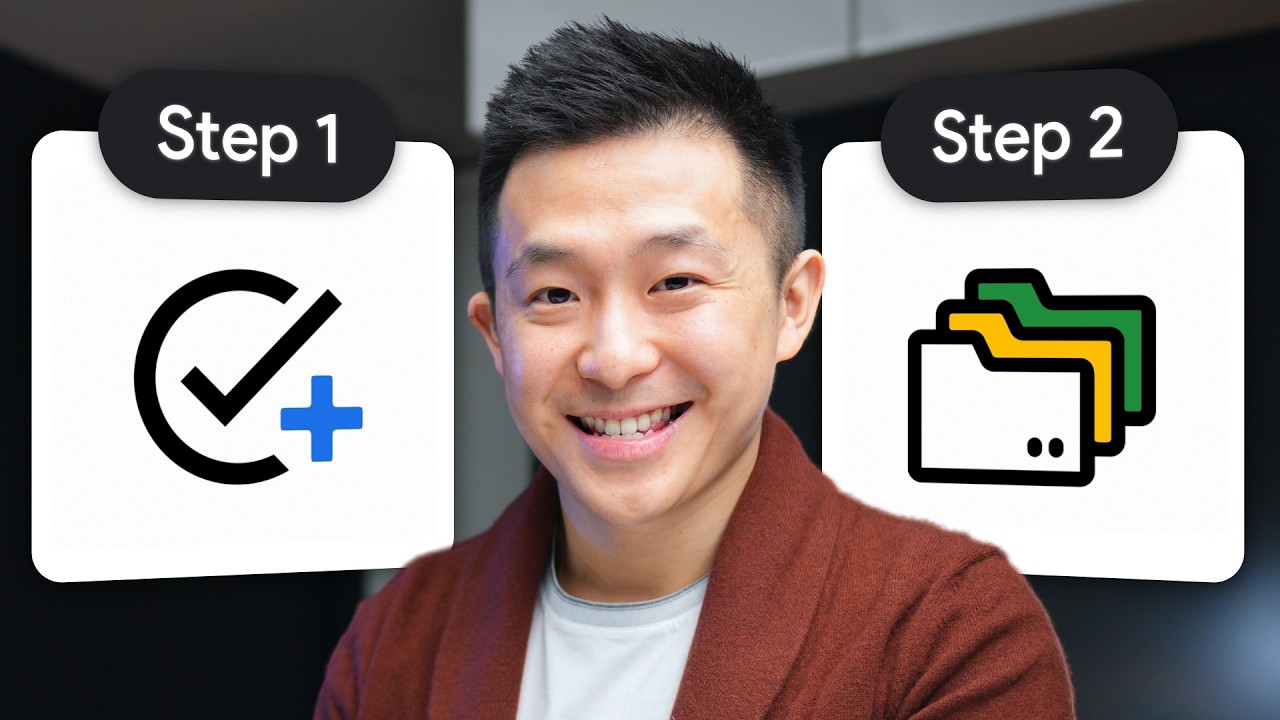
The Productivity System I Taught to 6,642 Googlers
Watch: https://www.youtube.com/@JeffSu
How to Actually Learn From These Channels (Not Just Watch)
Watching YouTube videos creates the illusion of learning without actually developing skills. Real learning requires active engagement, deliberate practice, and systematic application. Here’s the framework that transforms passive viewing into an advantage.
-
Start with a learning objective. Don’t randomly watch videos — identify the specific capability you need to develop. “Learn AI” is too vague; “Master prompt engineering for business document generation” gives you a target. Select 2-3 channels from the list above that directly address your goal.
-
Create a structured learning path. Begin with foundational concepts from DeepLearning.AI or The AI Advantage, then progress to applied content from Matt Wolfe or Nate Herk. Build complexity systematically rather than jumping between advanced topics. Most failed learning attempts come from choosing content above your current capability level.
-
Practice alongside the videos. Pause tutorials and implement each step in your own environment. Code along with examples, test with your data, and deliberately break things to understand failure modes. The muscle memory from hands-on practice embeds knowledge that watching alone never achieves.
-
Apply concepts to real problems immediately. Within 24 hours of learning a new technique, use it to solve an actual work problem. This application context cements the learning and reveals gaps in your understanding. Document your implementation notes, failures, and solutions — this becomes your personalized AI playbook.
-
Join community discussions. Comment sections, Discord servers, and Skool communities connected to these channels offer invaluable peer learning. Ask questions, share your implementations, and learn from others’ challenges. Often, the community discussions reveal insights the original video missed.
-
Review and iterate systematically. Schedule weekly reviews of what you’ve learned and how you’ve applied it. Which techniques delivered measurable value? Which tools integrated smoothly into your workflow? Which promised capabilities failed in practice? This reflection refines your learning strategy over time.
Based on my experience training executives, teams, and myself, this structured approach yields results ten times faster than haphazard content consumption. You’re not watching AI videos — you’re building an AI capability systematically, using YouTube as your personalized curriculum.
Bringing It All Together: Your 90-Day YouTube AI Education Plan
Stop random scrolling. Start systematic skill building. Here’s your actionable 90-day plan to transform from AI-curious to AI-capable using these YouTube channels.
-
Days 1-30: Foundation Building: Subscribe to DeepLearning.AI and The AI Advantage. Watch Andrew Ng’s Machine Learning Specialization at 1.5x speed, pausing to take notes on concepts relevant to your work. Spend 30 minutes daily on core concepts, 30 minutes applying them to simple projects. By week four, you’ll have a working understanding of how AI models function and can critically evaluate AI claims.
-
Days 31-60: Tool Mastery and Automation: Add Matt Wolfe and Nate Herk to your rotation. Test 2-3 AI tools weekly from Matt’s recommendations, documenting what works for your specific use cases. Follow one of Nate’s automation tutorials and implement it for a repetitive task in your workflow. This phase transforms theoretical knowledge into practical productivity gains.
-
Days 61-90: Specialization and Community: Based on your role, add specialized channels: Liam Ottley for entrepreneurship, Kevin Stratvert for Microsoft ecosystem, Jeff Su for productivity systems. Join at least one community (Skool, Discord, or Reddit) related to your focus area. Contribute by sharing your implementations and helping others solve problems. This teaching-to-learn approach solidifies your expertise.
-
Ongoing: Stay Current: Add Two Minute Papers and The Next Wave to your weekly viewing for research updates and strategic insights. Scan their latest videos every Friday to understand emerging capabilities and business implications. This forward-looking habit keeps you ahead of market shifts.
The key is consistency over intensity. Thirty minutes of focused daily practice beats six-hour weekend binges every time. Your goal isn’t consuming content — it’s developing capabilities that compound over your career.
What This Approach Won’t Give You (And What Actually Matters)
YouTube learning has limits. You won’t get formal credentials, structured accountability, or the deep theoretical foundations of academic programs. If you need a PhD or are conducting original AI research, YouTube supplements but doesn’t replace formal education.
These channels also can’t give you the one thing that matters most: real-world application under pressure. Watching Nate build an automation system is different from debugging your own system at 3 AM when it’s costing your company money. Actual expertise comes from shipping production AI systems and learning from failures.
But here’s what YouTube does provide that expensive programs often miss: breadth of perspective, immediacy of information, and diversity of teaching approaches. You learn from practitioners across industries, geographies, and use cases. You see what actually works in production versus what looks good in demos. You develop pattern recognition across hundreds of implementations rather than mastering one professor’s preferred approach.
The companies moving faster with AI aren’t waiting for perfect knowledge — they’re learning fast, implementing systematically, and iterating based on results. This YouTube learning strategy matches that reality. You develop enough expertise to start, learn from real implementations, and refine your approach continuously.
From my work advising dozens of companies on AI strategy, I’ve found that the leaders outperforming their competition aren’t necessarily the most technically skilled. They’re the ones who learn fast, apply systematically, and iterate based on results. These YouTube channels give you the knowledge foundation; your execution determines the outcome.
Beyond Prompts: How Context Engineering Is Shaping the Next Wave of AI
Imagine if building an AI was less about crafting “magic” prompts and more like directing a blockbuster film, where the script, sets, and…
insights.firstaimovers.com/beyond-prompts-how-context-engineering-is-shaping-the-next-wave-of-ai-c13f5e6dffc8

My Take on the YouTube AI Education Revolution
I’ve watched the AI education landscape evolve for over 25 years, from academic journals to MOOCs to today’s YouTube-first learning. The transformation is profound. We’ve moved from knowledge scarcity to knowledge abundance, and the bottleneck has moved from access to curation and application.
The ten channels above represent the new model of professional education: expert practitioners teaching at scale, community-driven validation, immediate application, and continuous updates that keep pace with technological evolution. This isn’t a temporary disruption — it’s the future of how professionals maintain competitive skills.
What excites me most is the democratization this enables. The executive in Amsterdam, the founder in Lagos, and the consultant in São Paulo now have access to the same world-class AI education. Geographic and economic barriers that once gated advanced technical knowledge have collapsed. The playing field isn’t perfectly level, but it’s flatter than it’s ever been.
Through First AI Movers, I’ve seen this democratization accelerate AI adoption across industries. Companies that would never have been able to afford McKinsey consultants now implement AI strategies informed by freely available, world-class education. Solo founders build AI products that compete with venture-backed startups. Mid-career professionals transition into AI roles without returning to school.
The challenge now isn’t finding good AI education — it’s developing the discipline to learn systematically rather than randomly consuming content. These and other YouTube channels provide the curriculum; you must provide the structure and application. Make a 90-day commitment, follow the plan above, and measure your progress through projects shipped rather than videos watched. That’s how you transform YouTube from entertainment into education that delivers ROI.
Next Steps: From Viewer to AI Practitioner
Theory without practice is entertainment. Transform these YouTube resources into actual capability by taking these specific actions this week:
-
Subscribe to three channels from this list based on your immediate learning objectives. Beginners: DeepLearning.AI, The AI Advantage, Jeff Su. Practitioners: Matt Wolfe, Nate Herk, Two Minute Papers. Entrepreneurs: Liam Ottley, The Next Wave, Matt Wolfe. Set notification preferences to “all” for these channels to establish a daily learning trigger.
-
Identify one painful manual process in your current workflow that consumes at least 30 minutes weekly. Watch Nate Herk’s n8n tutorials or Matt Wolfe’s automation videos to find a solution approach. Implement a version this week, even if imperfect. Real learning happens through messy implementation, not perfect consumption.
-
Join one AI community connected to these creators. Liam Ottley’s Skool group, Nate Herk’s free community, or a channel-specific Discord server. Introduce yourself, share what you’re trying to learn, and contribute to one discussion thread. Community learning compounds individual effort exponentially.
-
Block 30 minutes daily for the next 14 days as “AI capability development time.” Treat this like a standing meeting you can’t skip. Use 20 minutes for structured YouTube learning from your chosen channels, 10 minutes for immediate application in your work. Document what you know and how you apply it — this documentation becomes your personalized AI playbook.
-
Share one insight weekly with your professional network. LinkedIn posts, team presentations, or client conversations that demonstrate your growing AI expertise. Teaching forces clarity, builds your reputation, and creates accountability for continued learning. Within 90 days, you’ll be the person people ask about AI.
The AI transformation isn’t waiting for you to feel ready. These YouTube channels remove every excuse except execution. Your competitors are learning right now — the question is whether you’re building capabilities faster or watching from the sidelines. Choose systematic learning over random consumption, application over theory, and consistency over intensity. That’s how YouTube becomes your competitive advantage rather than another distraction.
AI Tool
Grammarly
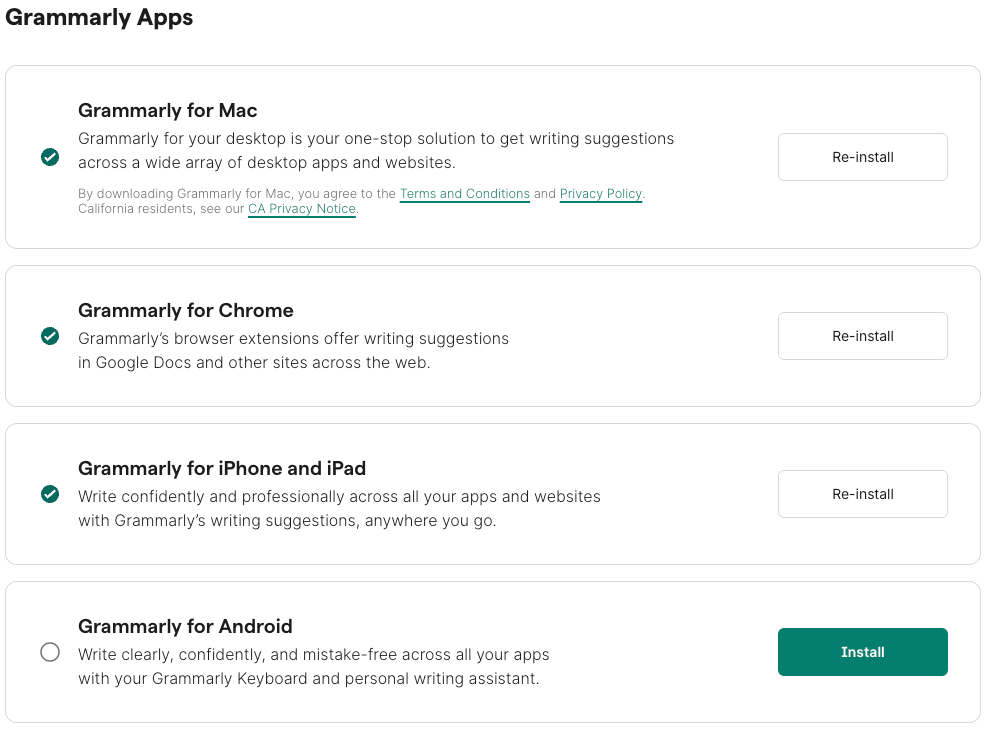
Grammarly is an AI-powered writing assistant for grammar, clarity, tone, plagiarism detection, and generative writing across web, desktop, and integrations. It helps busy professionals speed writing and editing and offers enterprise controls (team administration, SAML SSO, style guides, analytics) and enterprise plans. Grammarly publishes security and compliance details—SOC 2 Type II, SOC 3, ISO 27001/27017/27018/27701/42001 attestations—says data is hosted in AWS US East and encrypted in transit/at rest; confirm EU data‑residency or HIPAA-specific guarantees directly with Grammarly if required.
For services or sponsorships, email me at info at firstaimovers dot com; or message me on LinkedIn.